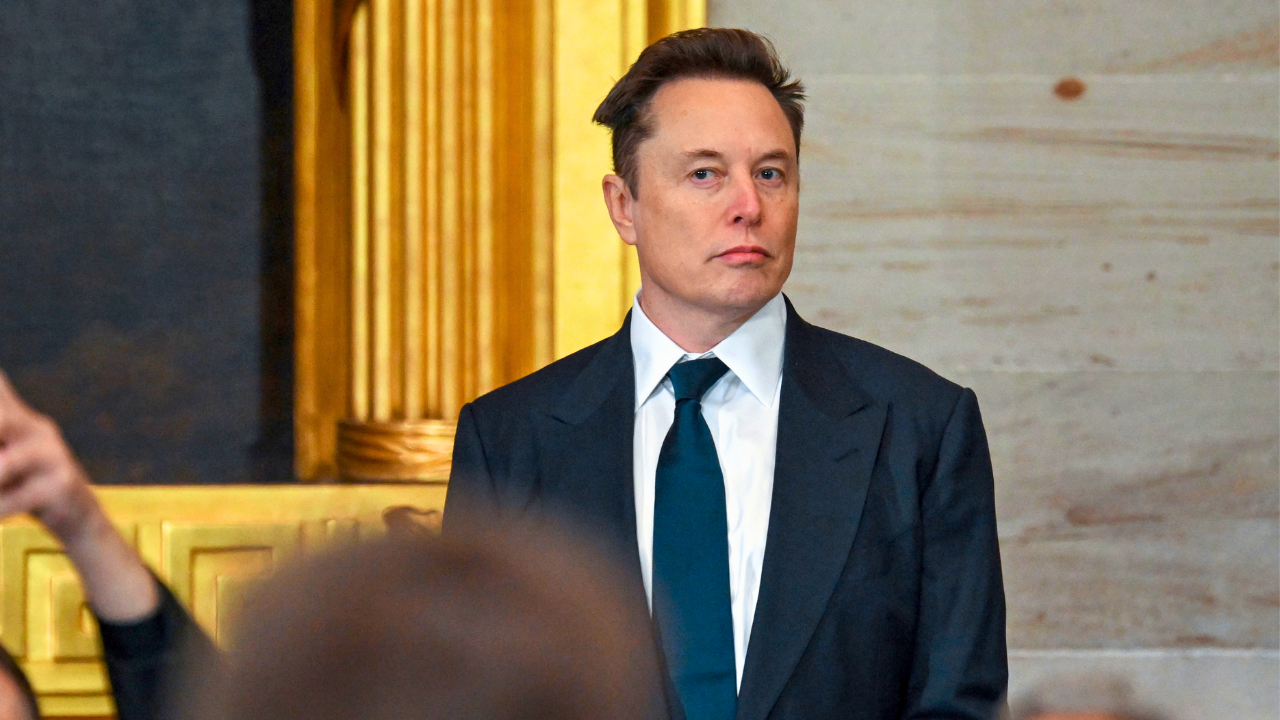
Elon Musk has escalated his legal fight with OpenAI and Microsoft by asking the court to order a massive repayment of what his side calls wrongful gains. A new filing lays out a damages range of about $79 billion to $134 billion, tied to the value Musk says was created after OpenAI moved away from its nonprofit roots and built a deep partnership with Microsoft.
The request comes as the case moves toward a jury trial expected to start in April in Oakland, California. A judge recently rejected efforts by OpenAI and Microsoft to end the case before trial, keeping key claims alive for a jury to decide.
What changed in this filing is the level of detail behind the dollar figure. Musk is not simply asking for a standard damage award. He is aiming at disgorgement, a legal remedy that seeks to strip alleged wrongdoers of profits tied to misconduct. In practical terms, it is a direct attack on the value created during OpenAI’s rise and Microsoft’s gains from its OpenAI relationship.
The court document shown in the screenshots is titled Plaintiff’s Notice of Remedies and is filed in the Northern District of California. The filing says the primary monetary remedy sought is disgorgement of wrongful gains. It also states that Musk may seek other monetary remedies at trial, including punitive damages, and that he may seek equitable relief such as an injunction after trial.
The filing credits the damages framework to an expert witness, financial economist C. Paul Wazzan. The document argues that Musk contributed about $38 million during OpenAI’s early period and describes that amount as roughly 60 percent of the nonprofit’s seed funding. It also claims Musk provided major nonmonetary support, including recruiting key employees, introducing business contacts, teaching the founders how to build a successful startup, and lending credibility and reputation to the venture.
The expert method described in the filing treats the alleged wrongful gains as a product of three factors. First is the current value of the OpenAI for profit entity. Second is the OpenAI nonprofit’s share of the for profit. Third is the portion of the nonprofit’s value that is fairly attributable to Musk’s monetary and nonmonetary contributions, which the expert estimates at 50 percent to 75 percent.
Using that structure, the filing presents a range for OpenAI’s alleged wrongful gains of $65.50 billion to $109.43 billion. It presents a separate range for Microsoft’s alleged wrongful gains of $13.30 billion to $25.06 billion, after adjustments described in the document for Microsoft’s investment costs and ownership stake. Combined, that produces the headline range of roughly $79 billion to $134 billion.
This matters now because it puts OpenAI’s financial story directly in the middle of the trial. Instead of focusing only on mission language and governance, Musk’s side is asking the court to translate the nonprofit to for profit shift into a very large dollars and cents claim. That creates pressure on OpenAI and Microsoft to argue not only that they acted properly, but also that the damages framework itself is unreliable.
OpenAI and Microsoft are already pushing back on that front. Reuters reported that the two companies have challenged Musk’s damages analysis, arguing that the expert approach is made up, unverifiable, unprecedented, and could mislead jurors. OpenAI has also described the lawsuit as baseless.
At the same time, OpenAI has been preparing the public narrative outside the courtroom. In a letter to investors and banking partners that was reported by CNBC, OpenAI warned that it expects Musk to make deliberately outlandish, attention grabbing claims ahead of trial and said it believes the case is worth no more than the $38 million Musk donated, though it added that this is not a guarantee.
That investor warning matters because it frames how OpenAI wants stakeholders to interpret what comes next. It signals that OpenAI expects reputational risk and wants investors to treat future Musk statements as noise rather than evidence. Critics of OpenAI’s approach argue that this kind of messaging looks less like transparency and more like preemptive damage control.
Strategically, the dispute is also about who gets to define OpenAI’s origin story. Musk’s theory leans on the idea that early donors backed a specific public benefit mission and that later moves toward a for profit structure changed the deal. OpenAI’s strategy, based on its public statements and filings described in reporting, is to argue that the claims are meritless and that Musk is using the legal system to attack a competitor.
What happens next is straightforward. The case is headed toward a jury trial in late April. Before then, the court is likely to deal with disputes over what the jury can hear from experts and what damages theories are legally allowed. The outcome will shape whether Musk can pursue a profit based remedy or whether the case narrows to other legal questions.
Looking ahead, this fight signals a larger shift in how AI governance disputes are being handled. Once, these debates lived in blog posts and open letters. Now they are moving into courtrooms where valuation, funding structure, and control are treated as evidence. For OpenAI, the risk is that its nonprofit to for profit evolution becomes the central issue in front of a jury. For Musk, the opportunity is to force that evolution into public discovery and a legal test without needing to attack the technology itself.